Three Categories of Prayer
Don't Leave God Alone: How to Get God's Attention, Remain in His Presence, and Even Change His Mind to Make a Difference in Your WorldThree Categories of Prayer is the book’s foundational pattern for a well-rounded prayer life: believers are taught to pray for their own needs, to pray for others, and to persist when an answer does not come quickly. Its decisive claim is that powerful prayer need not be complicated; it grows through deliberate time alone with God, instruction from Jesus Christ, dependence on the Holy Spirit, and refusal to abandon prayer when circumstances remain unchanged.
Origin and Basic Structure
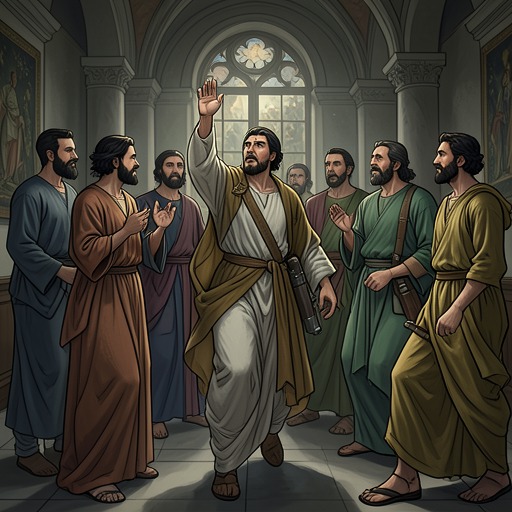
The framework begins with the disciple in Luke 11:1 who asked Jesus Christ to teach him to pray. The response was immediate and extended: Jesus Christ used the following twelve verses to give a detailed lesson, yet kept its basic structure simple. The teaching is arranged in three general categories: personal prayer for the individual, prayer for others, and persistence in prayer.
Personal prayer occupies verses 2–4 and establishes the believer’s relationship with God. Prayer begins by addressing God as “Our Father,” a form of address that personalizes the relationship rather than treating prayer as an impersonal religious exercise. The same pattern includes worship through the hallowing of God’s name, submission to the coming of His kingdom and the doing of His will, dependence expressed through the request for daily bread, forgiveness of sins, forgiveness extended to others, and confidence in the plea for deliverance from evil.
The second category is prayer for others, illustrated in verses 5–9. Prayer therefore moves beyond private need toward intercession and concern for people, communities, and nations. The framework does not treat this outward movement as optional decoration; it places it beside personal prayer as part of the basic makeup of a successful prayer life. The third category, persistence in prayer, appears in verses 10–13 and supplies the continuing force that keeps the first two categories from ending when prayer feels dry, unanswered, or difficult.
Learning to Pray in God’s Presence
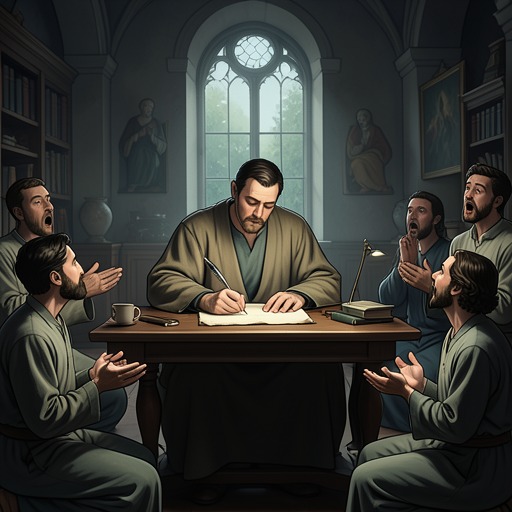
The book presents solitude with God as the principal setting in which prayer is learned. The author says that much of his own understanding came from remaining with prayer regardless of his feelings or present circumstances. Getting alone with God is not described merely as withdrawing from distraction; it is an active school in which God teaches the determined seeker.
This emphasis is reinforced by the claim that prayer should not be made artificially complicated. After more than twenty years of serving God, the author says that he keeps prayer simple by making God real to him. The more real he makes Jesus Christ, the more real Jesus Christ becomes in his life. The principle therefore joins theological instruction to repeated practice: the believer enters prayer, continues in it, and learns through sustained fellowship rather than waiting for ideal emotional conditions.
The book also acknowledges that time alone with God can feel unproductive. Prayer may seem dry, boring, or empty, and discouragement may follow when the believer does not sense God’s presence or see answers. In one personal account, a period that felt like both a valley and a desert lasted about six months. The author went to a camp for three days of fasting and prayer, while even bringing a sack of snacks in case the drought continued. During a walk in the woods, he saw deer at a distance and prayed for them to come near as a sign that God was hearing him; instead, the deer ran away. The episode makes the framework concrete: persistence is required precisely when a desired confirmation does not appear.
Persistence and the Refusal to Withdraw
Persistence is defined through the idea of importunity. In Luke 11, Jesus Christ is said to impart an attitude of refusing to take no for an answer. The term is explained as being shameless, bold, determined, pressing, entreating, and persistent in requesting. The same teaching is connected with Jesus Christ’s instruction in Luke 18:1 to pray and not faint. Persistence is thus not a momentary burst of emotion but a disciplined refusal to grow weary before an answer is received.
This principle also addresses spiritual failure. When Christians believe they have repeatedly failed in prayer, they may avoid prayer because of embarrassment or because they imagine that God is angry with them. The book compares this withdrawal with Adam and Eve hiding after they sinned. Their instinct to cover themselves and escape God’s presence becomes an image of leaving God alone. Against that response, the book urges believers to run to God rather than hide from Him, to seek forgiveness, and to continue cultivating fellowship even after failure.
The framework includes deliverance as another area in which persistence must be maintained. The stated principles are to refuse to leave God alone, use the Word of God and the name of Jesus Christ, believe that the Lord wants freedom for the believer, stand firm, refuse to give up on deliverance, and remain in a church with an anointed pastor who can help. Prayer is presented alongside Scripture, the name of Jesus Christ, steadfastness, church support, and worship as part of a sustained response to spiritual bondage.
Prayer Beyond the Individual
The outward category of prayer for others expands the framework from personal spirituality to collective responsibility. The book argues that persistent prayer can affect cities and nations, especially when believers refuse silence concerning violence, crime, church conditions, or other forms of evil. Drawing on Moses and Abraham, it presents the cry of the righteous as a force that must be louder than the cry of evil; otherwise, evil will prevail.
The author applies this conviction to the United States through a personal account of praying for the nation. While praying with his head buried in a couch, he sensed an overwhelming holy presence and heard a message that God was giving the nation another chance as He had given Nineveh, that He still had work to accomplish, and that He was not finished. The experience led him to identify Moses as a model of standing up for a people and to argue that persistent intercession can make a difference to a nation.
The same logic is applied to the six destructive influences associated in the discussion of Ezekiel 28 with Lucifer’s fall: violence, profanity, corrupt wisdom, defiled sanctuaries, iniquities, and terrorism or fear. The book tells readers who are troubled by conditions in their churches or communities to pray rather than remain passive. A collective prayer effort is illustrated by the author’s account of hurricanes threatening Florida. After an earlier prophetic warning was followed by prayers that did not prevent the storms, hundreds of people prayed fervently the next year concerning a named storm expected before a conference; that storm did not hit them. The author attributes the difference to determination and to a refusal to accept no as the answer.
The account continues with a claim that, in late 2005, the Lord spoke to the author about 2006 and that no major hurricanes like those of previous years would strike the United States. The book attributes the absence of major hurricanes hitting the country in 2006 to people praying collectively, individually, and fervently. Whether directed toward a personal need, a local crisis, or a national threat, the three-part structure consistently treats prayer as active participation rather than passive observation.
Communal Prayer and the Believer’s Response
Acts 12 supplies the book’s central example of a church practicing the third category together. Herod had killed James, the brother of John, with the sword and had taken Peter prisoner because the action pleased the Jews. Faced with the loss of one apostle and the imminent danger to another, the early church responded through prayer rather than a natural political strategy. The book identifies this diligence as a source of the power and results associated with the churches of the Book of Acts.
The framework therefore moves in widening circles. Personal prayer establishes identity, worship, dependence, forgiveness, and protection. Prayer for others turns that relationship outward toward people and public conditions. Persistent prayer gives both movements endurance, enabling believers to continue when emotional assurance, immediate answers, or favorable circumstances are absent. The model is simultaneously private and communal: it begins alone with God but can gather a church, a city, or a nation into sustained intercession.
The book closes by transforming the framework into an invitation. Readers who have never known Jesus Christ personally are urged to begin a new life of intimate relationship with Him and to spend quality time with Him every day. The offered prayer asks for forgiveness, repentance, the indwelling of the Holy Spirit, deeper closeness to God, and a life devoted to pursuing Him. In that closing appeal, the three categories become more than a study outline: they are presented as a daily practice through which freedom, blessing, and a continuing relationship with God are sought.